.png/:/rs=w:1209,h:680)

Our new Reuse Hub is now open
Our Reuse Hub has moved from it's original location at School Brae to its new home at 70 High Street.
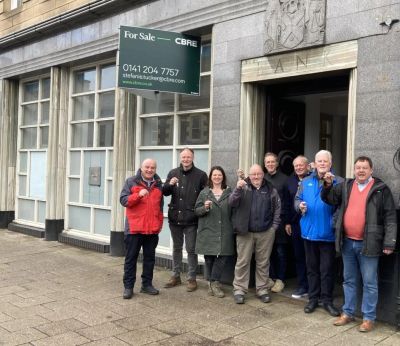
PCT acquires High Street Bank building
𝐏𝐞𝐞𝐛𝐥𝐞𝐬 𝐂𝐨𝐦𝐦𝐮𝐧𝐢𝐭𝐲 𝐓𝐫𝐮𝐬𝐭 𝐬𝐮𝐜𝐜𝐞𝐬𝐬𝐟𝐮𝐥𝐥𝐲 𝐜𝐨𝐦𝐩𝐥𝐞𝐭𝐞𝐬 𝐭𝐡𝐞 𝐩𝐮𝐫𝐜𝐡𝐚𝐬𝐞 𝐨𝐟 𝐭𝐡𝐞 𝐏𝐞𝐞𝐛𝐥𝐞𝐬 𝐇𝐢𝐠𝐡 𝐒𝐭𝐫𝐞𝐞𝐭, 𝐟𝐨𝐫𝐦𝐞𝐫 𝐁𝐚𝐧𝐤 𝐨𝐟 𝐒𝐜𝐨𝐭𝐥𝐚𝐧𝐝 𝐛𝐮𝐢𝐥𝐝𝐢𝐧𝐠.
It is coming up to a year since the Bank of Scotland closed its Peebles High Street branch and the “For Sale” board went up, and today Peebles Community Trust (PCT) is delighted to announce that we have successfully completed the purchase of the building. We now turn our attention to moving the “Reuse Hub" to its new home in the coming weeks.
PCT Chairman, Michael Ireland, said “this is a real milestone for PCT and the wider Community which we are incredibly proud to share today. “We won’t be making any exterior changes to such a fine building although we will making some minor changes internally such as redecorating and installing shelving and shop displays, so we’ll be busy for a few weeks getting ready and then moving the Reuse Hub from School Brae into its new High Street home".
The Trust secured the purchase by way of part funding through a loan from Social Investment Scotland, with the balance made up from PCT’s own cash reserves. Mr Ireland emphasised – “We are incredibly grateful to Social Investment Scotland. They have been supportive of this project throughout the entire process. This loan to PCT does mean some extra financial pressures on the Trust, but we intend to launch some fundraising options soon, to help pay the loan off as soon as possible and raise much needed cash for other Community projects".
PCT Treasurer, Susan Lawton said – “we’ve planned for the additional financial commitments arising from this purchase, based on our current income from the Re-Use Hub, but we are all confident that the move to the High Street will increase the overall profile and footfall, which, in turn, will hopefully translate into increased income for the Trust”.
PCT are also hoping that the increased profile and footfall to the new High Street Reuse Hub will increase the number of “re-loved” items being donated and therefore reduce the number of items going to landfill as a direct result.
Mr Ireland added – “the Re-Use concept is a bonus for everyone locally at a number of levels, as items destined for landfill from the town are diverted to re-use and this generates income for the Trust, which, as best possible, remains in the town, as PCT are committed to spending that money on goods and services locally”.
The PCT Board were also keen to thank the Bank of Scotland and those organisations and individuals who have supported their journey in purchasing the building. Mr Ireland highlighted – “I’m not sure if we would have been successful without support from others and the Bank of Scotland have been exceedingly accommodating in the process, which, again, has meant we could keep progressing the purchase with certainty.”

Refurbishment begins on historic Peebles Station building
Having successfully completed a community asset transfer building we are starting the refurbishment programme to restore it. We are now interested in speaking to businesses who might be interested in leasing the building once the refurbishment is completed.

Community Asset Transfer
We are in discussions with Scottish Borders Council which would see the ownership of the old toilet block in School Brae hub transfer to PCT for community benefit.
Community Woodland development underway
A new era opens at Eshiels Community Wood this spring. All the conifers have been felled in the former commercial forestry of seven hectares on the Tweed riverbank and work is beginning to replant the area with native deciduous trees.

Peebles Community Trust (PCT) is established as a not-for-profit Development Trust whose objective is
"A sustainable Peebles - strengthening and improving the community's physical, economic, social and cultural infrastructure"
PCT is managed by a board of directors who are answerable to a membership drawn predominantly from within the boundary of the local Community Council, but also drawing membership from nearby settlements for which Peebles acts as a local centre, including – Manor, Stobo and Lyne; Broughton, Blyth Bridge and Romano Bridge; Lamancha and Eddleston; Cardrona, Innerleithen and Walkerburn.
We are registered as a not-for-profit company limited by guarantee with a membership of around 300.
PCT is supported by the Development Trust Association Scotland (DTAS) and Community Land Scotland.
The Trust operates from our Reuse Hub, 70 High Street, Peebles which it owns and manages on behalf of the community.

Eddleston Water Path: connecting communities
Peebles Community Trust is proud to have been a lead partner in the development of the new Eddleston Water Path connecting Eddleston with Peebles which opened in 2023.

Eshiels Community Woodland
In April 2019 PCT acquired this 7 hectare site near Peebles from Forest Enterprise Scotland under the Community Asset Transfer Scheme. It is managed on behalf of PCT by a local volunteer group with the objective of enhancing the landscape, improving biodiversity whilst allowing public access to the woodland.

March Street Allotments
PCT have successfully led discussions with Whiteburn Projects, the new owners of the March Street Mill site which will now see ownership of the allotments transferred to PCT who will then lease them back to the March Street Allotments Association.

Learn more about our development plans for our School Brae
PCT provides administration support to these locals groups
Peebles Youth Voice
Peebles Youth Voice
Peebles Youth Voice

Floral Peebles
Peebles Youth Voice
Peebles Youth Voice
Cycling Without Age
Peeblesshire Paths Group
Peeblesshire Paths Group
Peeblesshire Paths Group
Peeblesshire Paths Group
Peeblesshire Paths Group